
The desert pioneer behind our first oil discovery
The story of Khamis bin Rimthan, a gifted guide and a longtime employee of Aramco whose unerring instincts guided oilmen into the farthest reaches of the country.
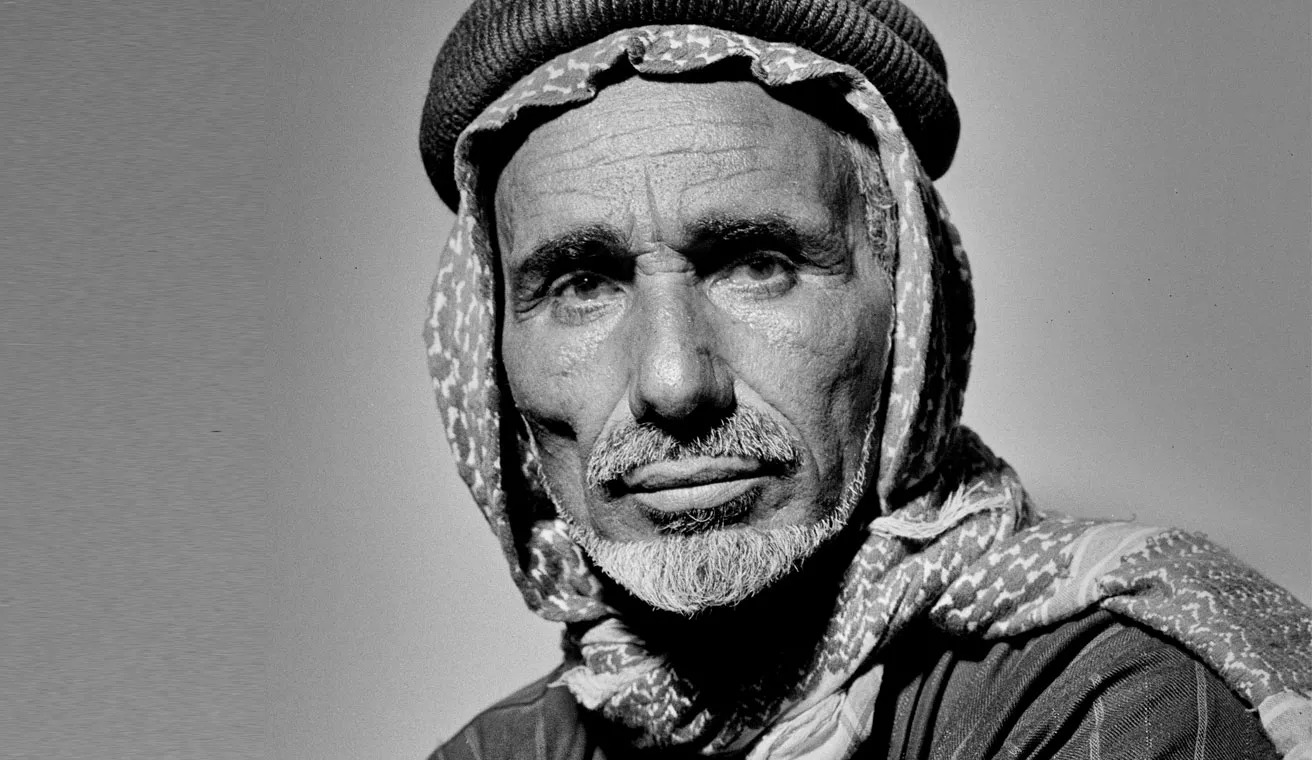
- Khamis bin Rimthan’s unmatched knowledge of the Saudi deserts guided Aramco’s early geologists to Saudi Arabia’s first oil discovery in 1938
- Remembered for his wisdom and leadership, Rimthan’s legacy lives on through the ‘Rimthan oilfield’ named in his honor
As a global energy company with deep roots in Saudi Arabia’s history, we at Aramco owe much of our success to the pioneers who shaped the early chapters of oil exploration in the Kingdom. Among them is Khamis bin Rimthan, the legendary Saudi guide whose extraordinary knowledge of the desert and partnership with our geologists led to the discovery of Saudi Arabia’s first oil well in 1938.
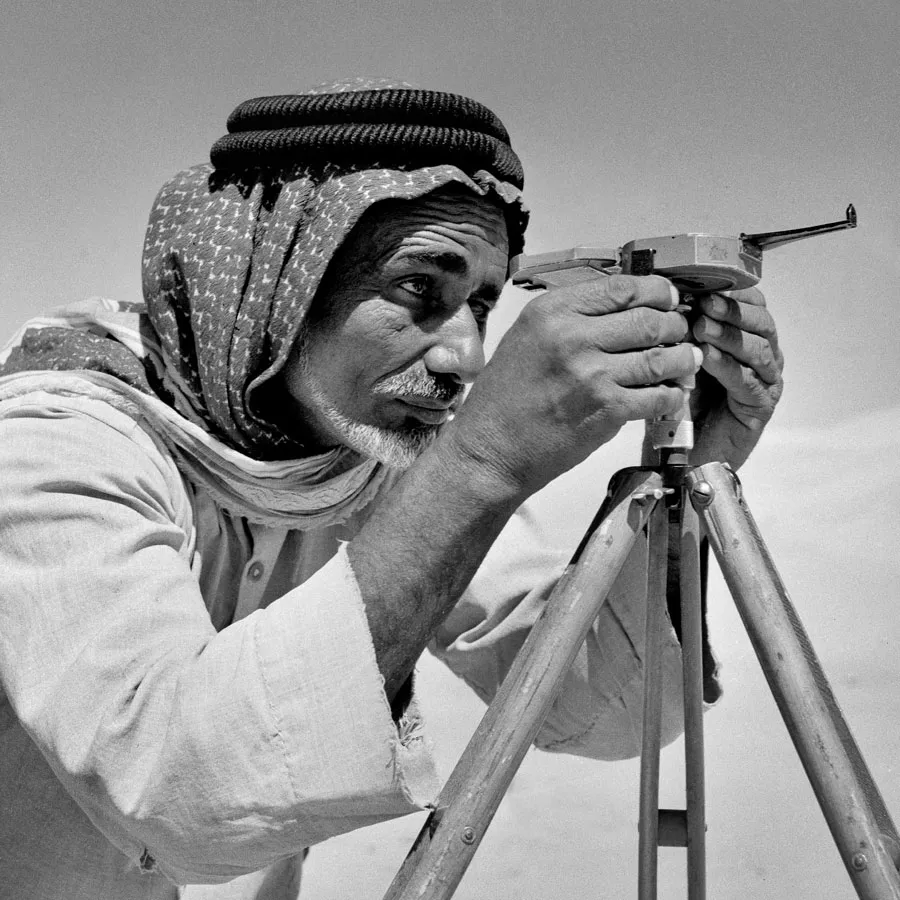
Long before seismic surveys, satellites, or GPS were invented, Rimthan navigated the vast deserts of Saudi Arabia’s Eastern Province — guided by the shape of dunes, the color of the soil, and the position of the stars. His intuition, precision, and integrity made him a bridge between two worlds: the traditional wisdom of the Arabian desert and the emerging science of petroleum geology.
A life shaped by the desert
Born in the early 1900s in the Saudi Arabia’s Eastern Province, Rimthan belonged to the Ajman tribe — a community deeply connected to the desert. He grew up mastering the traditional skills of desert navigation, using stars, recognizing subtle shifts in sand, and reading the terrain as though it were a map drawn from memory.
Every hill, every valley, every cluster of thorn trees in the vast expanse of the Saudi deserts carried meaning to him. What seemed like an endless desert to others was, for Rimthan, a familiar and understandable landscape.
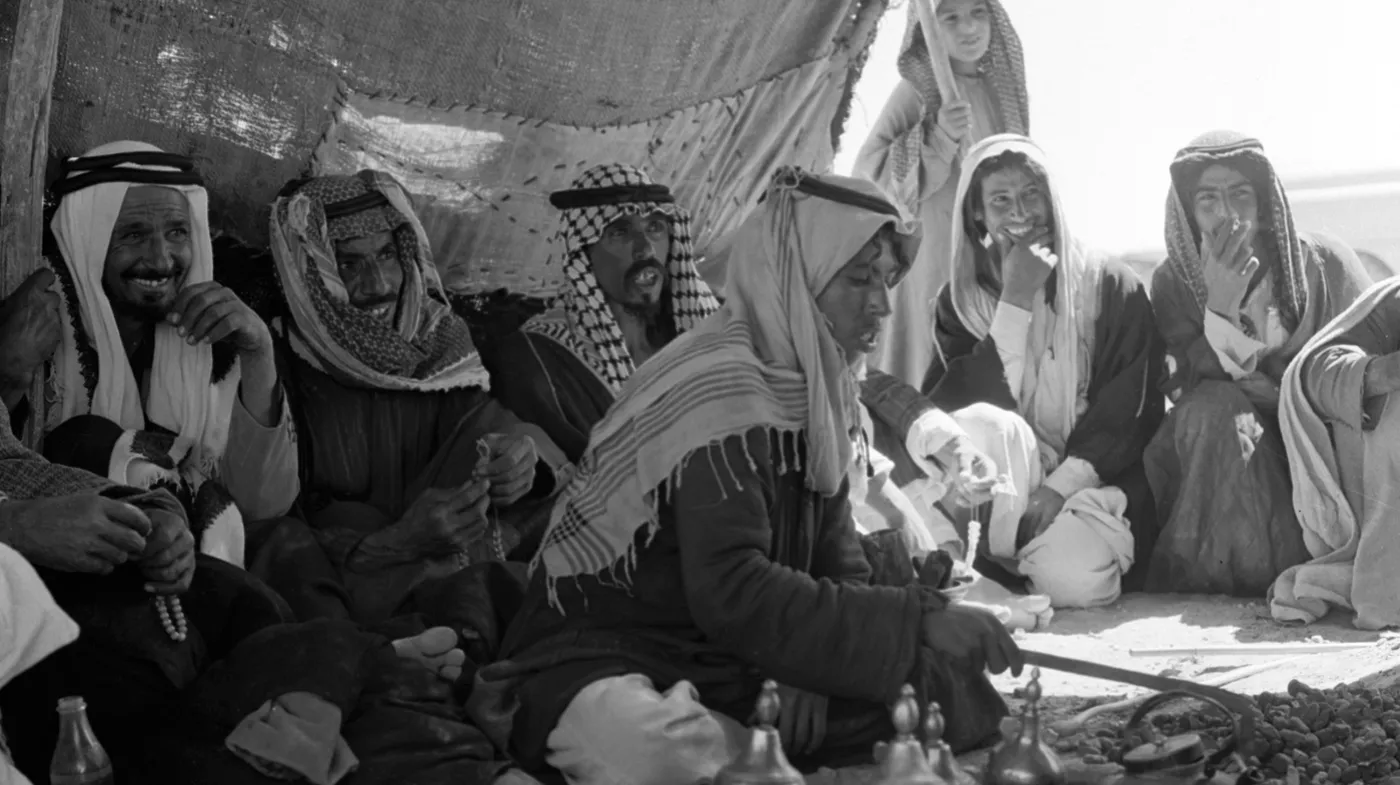
Khamis bin Rimthan belonged to the Ajman tribe, which was deeply connected to the desert.
By the 1930s, Rimthan had earned a reputation as an exceptional desert tracker and guide. His expertise drew the attention of government officials and early exploration teams venturing into Saudi Arabia’s Eastern Province. When Aramco, then known as California Arabian Standard Oil Company (CASOC), began its first surveys, Rimthan’s name quickly rose to the top of the list of local guides.
In 1934, he officially joined our exploration crews. His deep understanding of the land became our compass in a sea of sand.
A man of wisdom and humility
Those who worked with Rimthan often described him as calm, observant, and deeply wise — a man of quiet confidence who led not by command but by example.
As Aramco’s own publication, Aramco World rightly puts it, “Khamis had an uncanny knowledge of the land, and built-in navigational skills…He did not use the maps, but ask him in what direction a certain landmark lay, and he would tell you. Ask him how far, and he would know within a very narrow margin of error.”
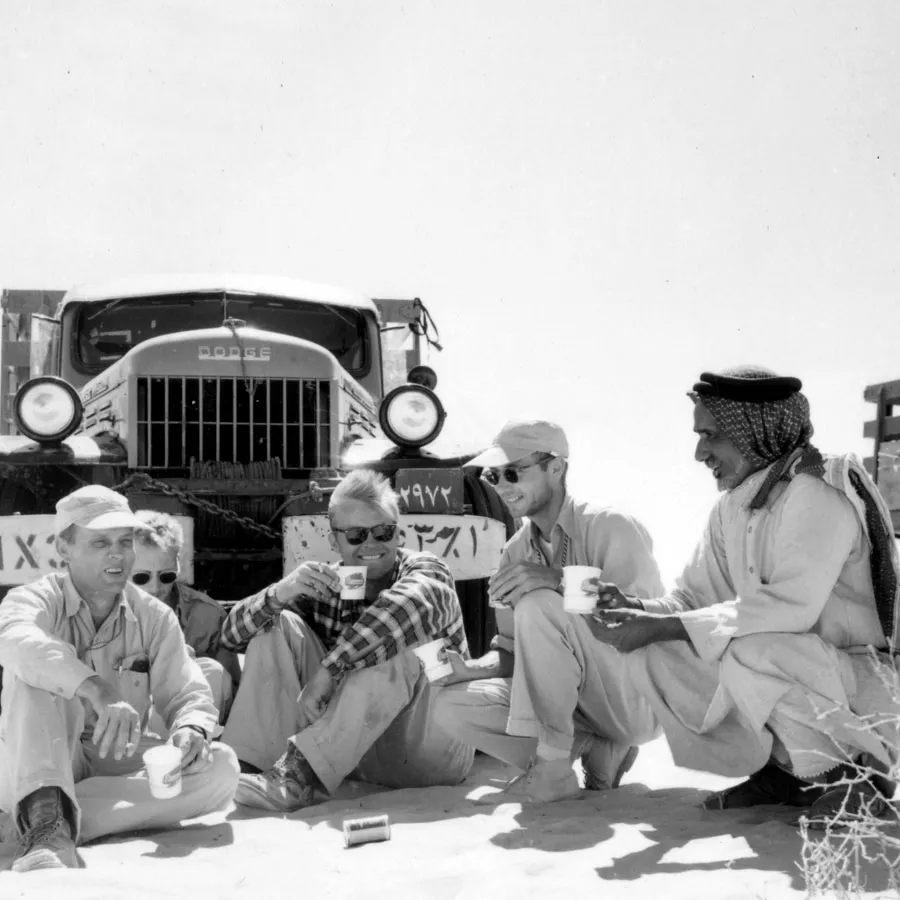
Beyond his navigational mastery, Rimthan also possessed a deep sense of cooperation and understanding. He served as a cultural bridge between American geologists and the local communities they encountered. Through his guidance, communication flourished, and trust was built — a trust that would prove vital in the years of exploration ahead.
Working with our geologists
When exploration in Saudi Arabia’s Eastern Province began in the early 1930s, American geologists struggled to identify locations in a sprawling, monochrome desert. With no running rivers, mountains, forests, or lakes to serve as guideposts, their efforts would have been fruitless. In 1935, Rimthan began assisting our geological teams. Among those he worked closely with was our Chief Geologist Max Steineke, whose determination and scientific insight led the early search for oil. Together, Rimthan and Steineke formed an extraordinary team. While Steineke was guided by instruments, Rimthan purely relied on instinct, both united by the pursuit of understanding the desert’s hidden potential.
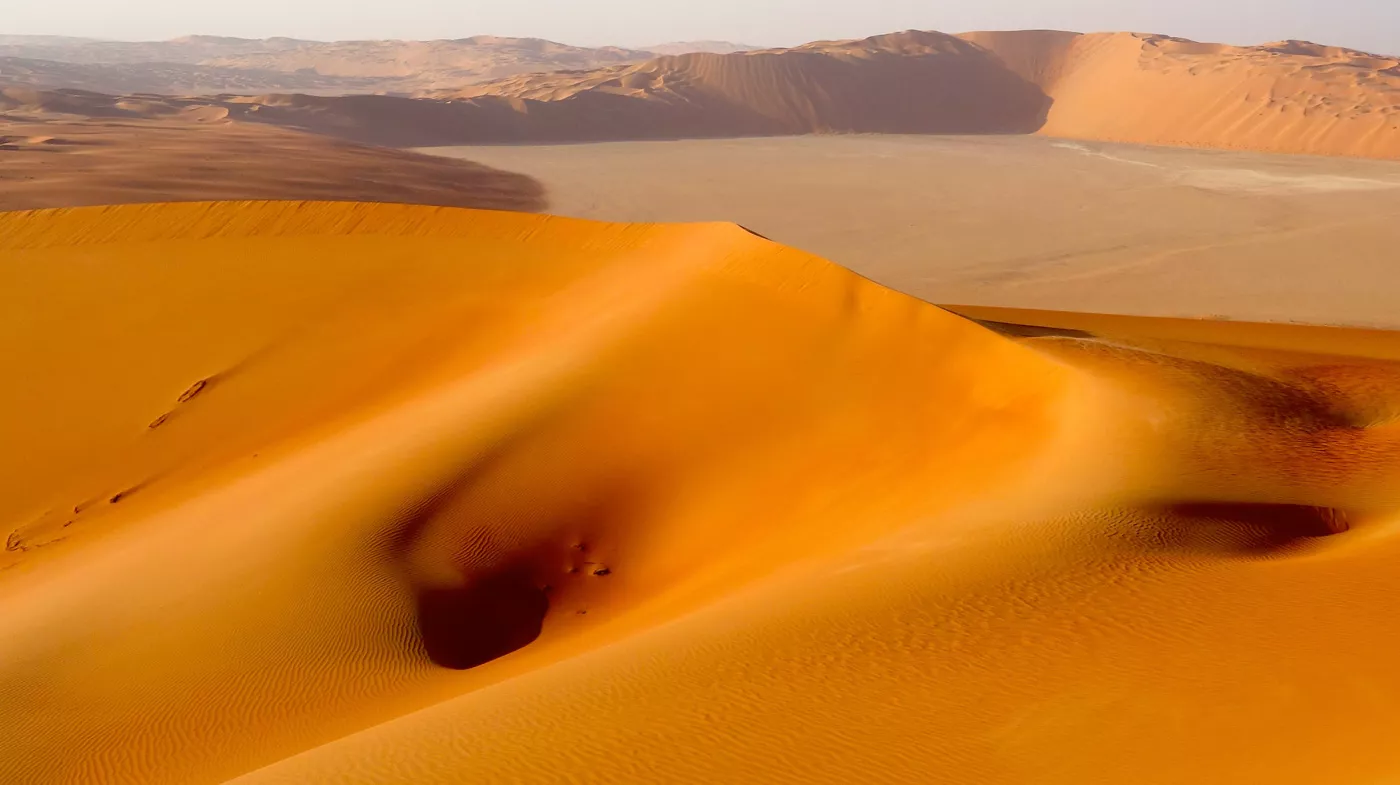
During early exploration, Khamis bin Rimthan guided our geologists across the monochrome deserts.
Aramco World records how our early geologists often recounted Rimthan’s exceptional ability to find his way across terrain no foreigner had ever mapped. They were amazed by his ability to identify locations and how to get to them with precision. Neither inclement weather conditions, nor darkness of night, fazed him. One of our early geologists and former Aramco President Tom Bargar referred to Rimthan as “the guide of the guides.”
According to Barger, Rimthan never lost his way in the desert, because in addition to his sixth sense, a kind of buried compass, he had an excellent memory. Surprisingly, he could remember a bush he passed as a young man or a well he had heard about 10 years ago.
Aramco World also records how on one occasion in the desert, when the team was trying to guess how far they were from Dhahran, Rimthan simply guessed 500 miles, a guess that proved to be remarkably accurate.
For Rimthan, navigating the deserts was not a mystery — it was a conversation with the land. Through the mid-1930s, he guided our crews across the sands of Dhahran, Abqaiq, and Dammam, helping chart geological formations that hinted at the presence of oil.
More than a desert guide
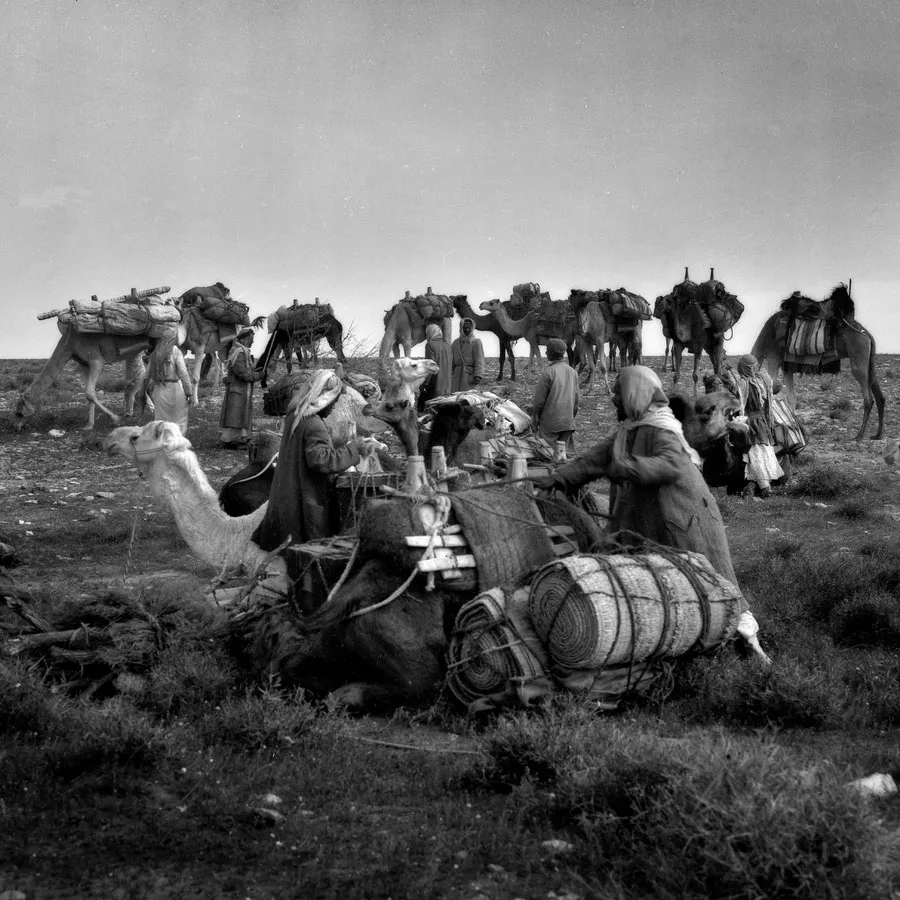
Rimthan’s role in our early oil discovery extended beyond guiding. Sometimes he worked with local tribes to organize camel caravans to transport drilling supplies like drilling mud, cement, and oil drums.
During the early 1940s when wartime shortages made vehicle transport difficult, we experimented with camel caravans to move drilling supplies across the desert. The idea was to divide materials into small loads that Bedouin camel drivers could carry, helping both the Company and the local economy during a period of hardship.
At the Abqaiq and the Al-Jauf wildcat sites, hundreds of camels carried drilling mud, cement, and lubricating oil across the desert. On one occasion, Rimthan had arranged 75 camels for a two-day route across the desert, but Bedouins with some 500 camels showed up. They jokingly called their impromptu camel corps the ‘Khamis Transportation Company’ in honor of Rimthan who acted as the agent to the Bedouins.
Leadership beyond the compass
As exploration intensified, Rimthan’s responsibilities grew. By the early 1940s, he had become our chief desert guide, leading large camel caravans across the Eastern Province when motor transport was still rare.
Our geologists often said that Rimthan possessed a sense of direction that seemed almost supernatural. Yet what truly set him apart was his character: his patience, humility, and ability to bring people together in the face of hardship.
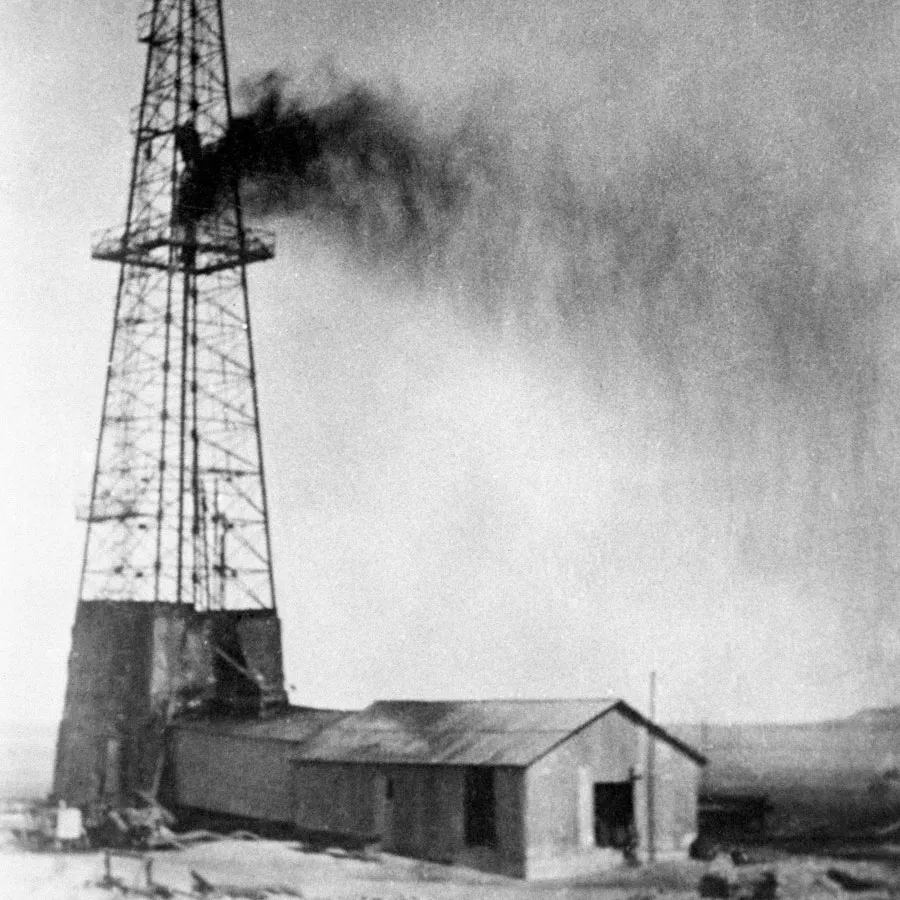
When Dammam No. 7 — later known as the ‘Prosperity Well’ — struck oil in commercial quantities on March 4, 1938, it was the culmination of years of combined effort, courage, and faith. Rimthan’s expertise had guided our teams to the right places, at the right time.
Rimthan's assistance also led to the discovery of several oil wells in what is now known as the Ghawar field, extending some 300 kilometers between Abqaiq and Haradh.
A Lasting mark on our history
Rimthan passed away in 1959 at the age of 50, after battling cancer. But his name continues to resonate deeply within our Company’s heritage.
In 1974, we named the ‘Rimthan oilfield’ in his honor — a tribute to his pioneering role in the discovery of Saudi Arabia’s first oil.
As we look back on our journey from those early desert expeditions to today’s global energy leadership, Rimthan stands as a symbol of partnership between human wisdom and technological innovation.
He represents the best of both worlds — the Bedouin’s timeless understanding of nature and the geologist’s quest for knowledge. Together, they laid the foundations of what would become one of the most transformative discoveries in modern history.
A heritage of partnership
Our story has always been one of collaboration — between people, disciplines, and generations. Rimthan’s contribution reminds us that great discoveries are rarely made by science alone. They arise from shared respect, open minds, and the courage to explore the unknown.
As we continue to innovate and expand our understanding of energy and sustainability, the spirit of pioneers like Rimthan endures — a testament to how human insight and natural intuition together can shape history.
The material in this article is intended to be for general informational purposes only, and readers should not place undue reliance on the statements or opinions therein. Any information provided speaks only as of the date this content was published and Saudi Aramco undertakes no obligation to correct, update, or revise any statements or opinions made in or implied by this article.